
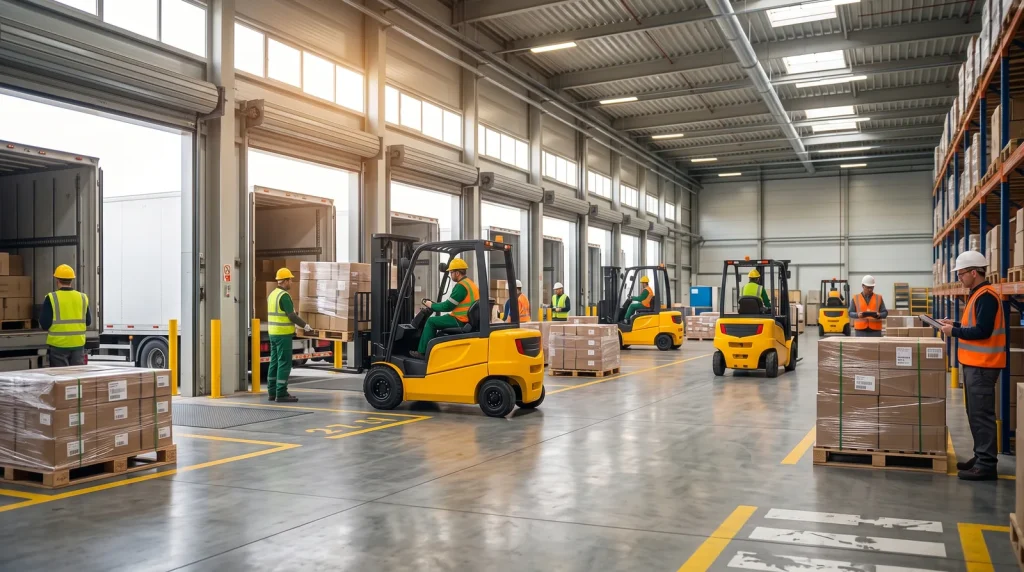
For many manufacturing and distribution operations, the end of the year brings more orders, more shifts, and more material to move. When production ramps up, your own forklifts often aren’t enough. A seasonal forklift rental covers that peak without buying equipment that will sit idle afterward. It works best, though, when you plan ahead. In this guide, we explain how to do it step by step.
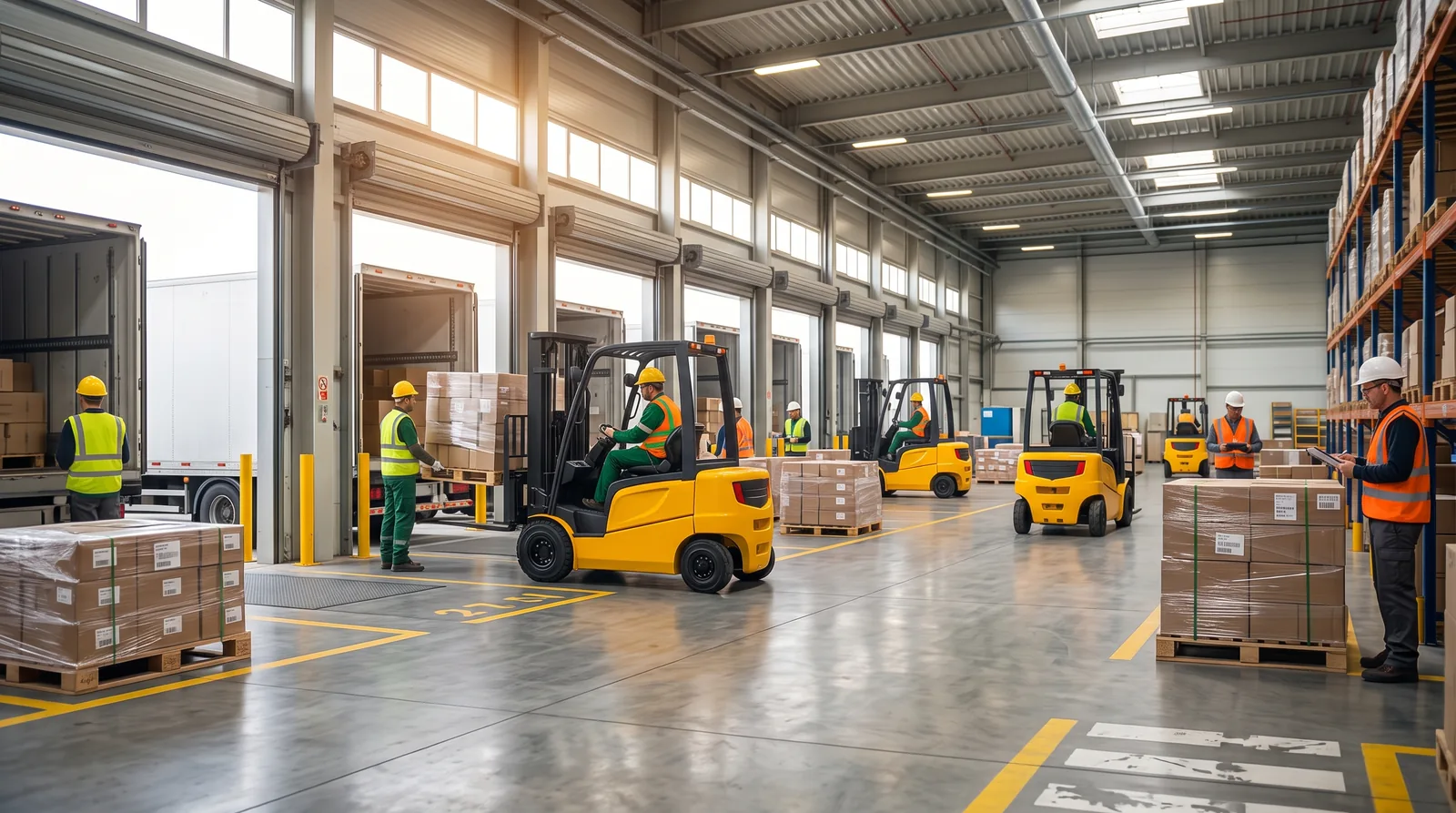
1. Review Your Production Forecast
First, start with your operation’s numbers. Check how much volume will increase, in which weeks, and whether you’ll add shifts. With that information, you can estimate how many additional material moves you’ll have and in which areas.
2. Calculate How Many Trucks You Need and What Type
Not every area needs the same forklift. For example, shipping and receiving usually call for counterbalance trucks, while a warehouse with tall racking may need a reach truck. Meanwhile, an order picker may be the best fit for picking parts.
Therefore, define the following for each area:
- The maximum load weight and stacking height.
- Aisle width and floor type.
- Whether the work is indoors, where an electric truck makes sense, or outdoors in yards.
- How many shifts each truck will run.
3. Book Early
During peak season, many companies look for equipment at the same time. For that reason, reserve your forklifts several weeks in advance and agree on delivery and return dates with your provider.
Also, leave some room. If the season runs longer, it’s easier to extend a rental than to find equipment at the last minute.
4. Prepare Your Operators
More shifts mean more operators, and every one of them must be trained and authorized by your company. This is especially important if they’ll use a truck type they don’t know. Read our guide on forklift operator training requirements.
5. Get the Space Ready
In addition, before the forklifts arrive, decide where they’ll park and, for electric trucks, where they’ll charge. The charging area should be ventilated, clearly marked, and have the right electrical setup. For best practices, see our guide on electric forklift battery charging.
6. Tune Up Your Own Fleet
Peak season is the worst time for an owned truck to break down. That is why you should schedule preventive maintenance for your forklifts before it starts, and keep the most common wear parts on hand.
7. Set Up a Way to Report Problems
Agree with your provider on a direct channel to report any issue, such as WhatsApp or a phone line, and share it with every shift supervisor. As a result, you shorten response time if a truck goes down.
8. Plan the End of the Season
Finally, when the peak is over, inspect the trucks with your provider and coordinate the return. It’s also a good time to review the season: if you needed extra equipment for many months, it may be worth evaluating whether to rent or buy a forklift next year.
Forklift Rental for Your Peak Season
At Juárez Rental, we help you define how many trucks you need and what type. Explore our forklift rental and electric forklift rental options.
Already planning your season? Contact us and reserve your equipment in time.