
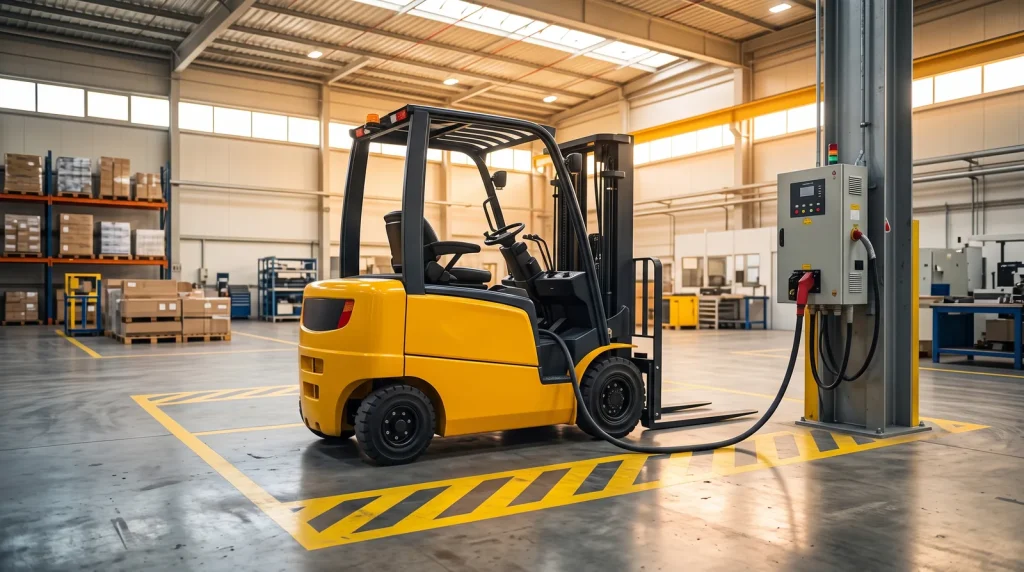
Renting an electric forklift is a practical way to move materials indoors with zero emissions and less maintenance. Still, the equipment performs best when your team uses and charges it correctly. In this guide, we cover electric forklift battery charging and daily care habits you can apply from day one to avoid downtime and extend battery life.
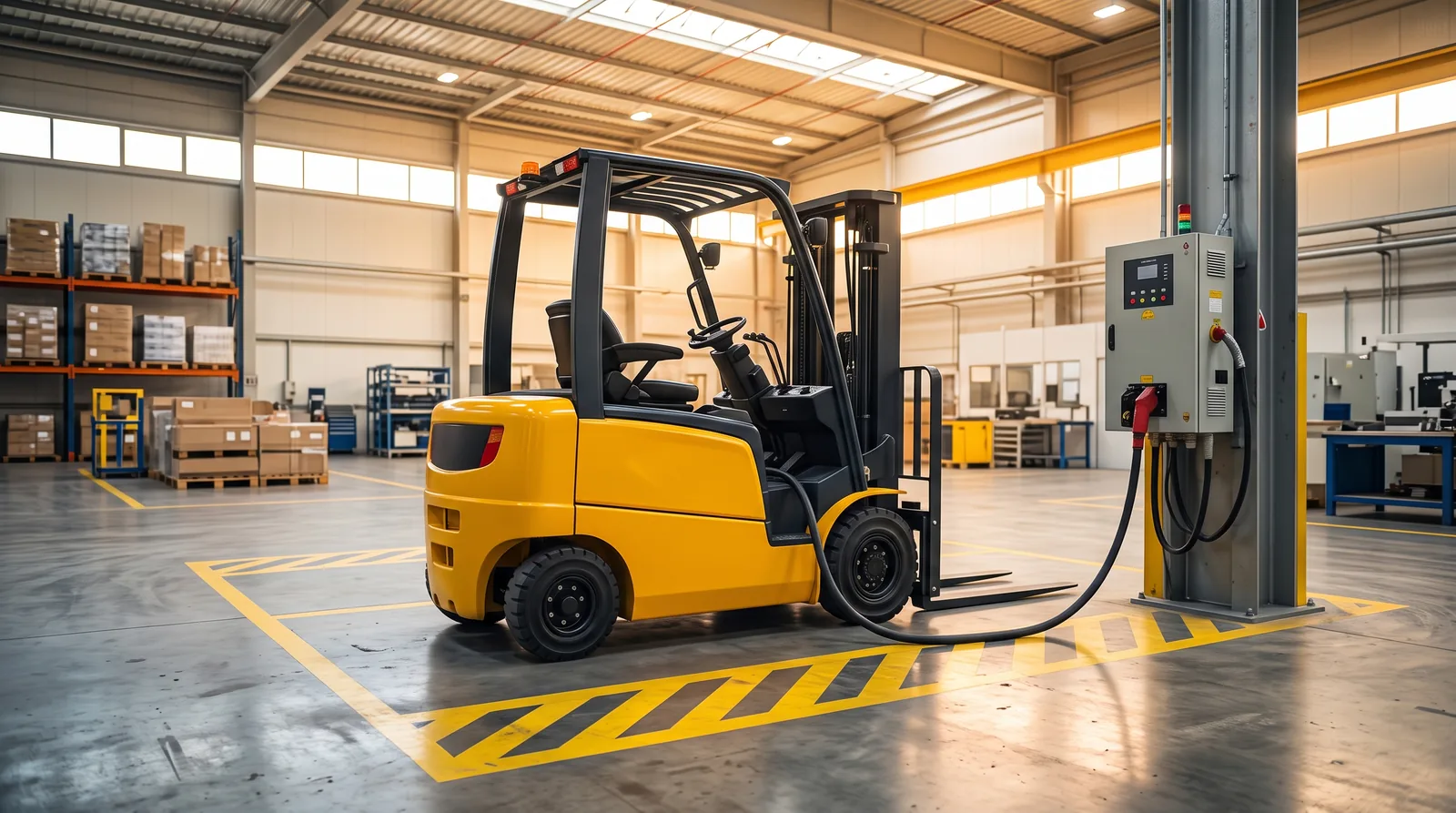
Why the Battery Is the Heart of the Truck
On an electric forklift, the battery powers travel, lifting, and every other system. It is also one of the most expensive components. That is why most performance problems, such as loss of power or trucks that can’t finish a shift, come down to poor charging habits.
The good news is that these habits are easy to fix when everyone on the team follows the same rules.
Electric Forklift Battery Charging Best Practices
Every battery type has its own guidelines, so always follow the manufacturer’s and your rental provider’s instructions. That said, these recommendations apply to the lead-acid batteries used in many electric forklifts:
- Charge at the right time: plug in when the indicator shows a low charge, without running the battery completely flat.
- Finish the cycle: avoid unplugging the charger halfway. Short, repeated charges shorten the life of this battery type.
- Use the assigned charger: a charger that doesn’t match the battery or its voltage can damage it.
- Charge in a designated area: it should be ventilated, clearly marked, and away from sparks or open flames.
- Check water levels when required: on batteries that need it, top off with distilled water after charging, wearing the proper protective equipment.
If your truck uses a lithium-ion battery, the rules change. For example, lithium-ion batteries allow opportunity charging during breaks. Ask your provider which technology your rented forklift uses.
Daily Pre-Shift Checklist
A few minutes of inspection at the start of each shift helps you catch problems before they turn into downtime or an accident. Cover these basics:
- Battery charge level and condition of cables and connectors.
- Brakes, steering, and horn working properly.
- Chains, mast, and forks free of damage, cracks, or bending.
- No hydraulic oil leaks under the truck.
- Tires in good condition, with nothing embedded in them.
- Lights, strobe, and backup alarm working.
To keep records simple, use a printed or digital checklist and have the operator sign it every shift.
What to Do If You Spot a Problem
If the truck shows a problem during the inspection or while operating, the most important step is to stop using it. Then report it to your rental provider right away.
Don’t let your team attempt repairs on their own. Work done without the right tools or training can make the damage worse and put the person at risk. In addition, rented equipment should only be serviced by authorized technicians.
Signs the Battery Needs Attention
Watch for a truck that no longer finishes a shift on a full charge, loses power when lifting, or has a battery that runs hotter than usual. Corroded terminals and unusual odors while charging are also warning signs. To learn more, read our article on the signs an electric forklift battery needs replacing.
Electric Forklift Rental with Technical Support
At Juárez Rental, we walk you through proper use and charging when we deliver the equipment. Our service shop also handles any problem so your operation keeps moving.
See the equipment available on our electric forklift rental page. Still deciding between technologies? Read our comparison of electric vs. combustion forklifts.
Need equipment for your operation? Contact us and we’ll help you choose the right forklift.