
Every forklift works under load, friction, and vibration during each shift. Over time, some parts deteriorate faster than others. These are known as forklift wear parts, and checking them on time prevents breakdowns, accidents, and unexpected downtime. Below, we explain the seven most important ones and the warning signs to watch for.
Why Check Your Forklift Wear Parts?
A worn part rarely fails overnight. It usually gives warning signs first: noises, leaks, vibrations, or a slower response. That is why spotting them early lets you schedule the replacement without stopping your operation.
In addition, replacing a wear part costs much less than repairing the damage it causes when it fails. For example, a stretched lift chain can damage the rollers and the mast. In fact, OSHA publishes guidance on the most common forklift hazards and how to prevent them.
Forklift Wear Parts in the Wheels and Brakes
1. Tires. They are the hardest-working parts. Check for cracks, missing chunks, or uneven wear. If wear is visible or the forklift vibrates more than usual, it’s time to have a technician inspect them.
2. Brakes. Brake pads and brake components lose effectiveness with use. If the forklift takes longer to stop or the pedal feels different, it’s time to check them. In this case, don’t wait, because brakes are a safety component.
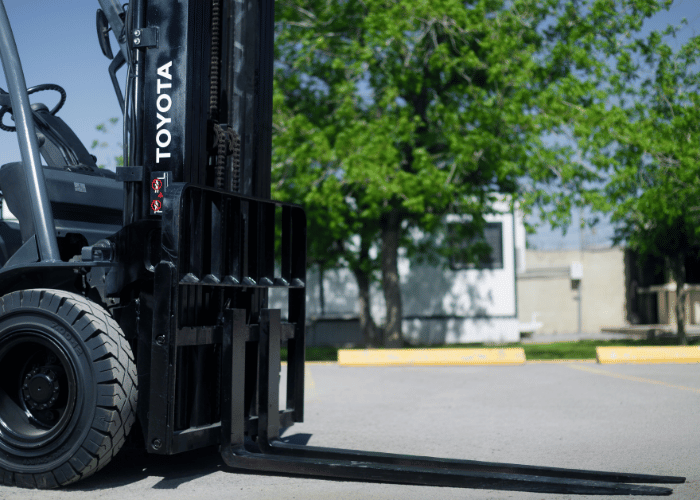
3. Forks. Forks wear down from friction against the floor and pallets. As the heel loses thickness, its load capacity drops significantly. That is why a technician should measure them and decide whether they need replacement. Also, check that they aren’t cracked or bent.
Forklift Wear Parts in the Mast and Hydraulic System
4. Lift chains. With use, chains stretch and lose lubrication. If you notice a chain that is stretched, rusty, or has stiff links, ask a technician to inspect it. In addition, lubricate chains according to the manufacturer’s schedule.
5. Hydraulic hoses and seals. Oil leaks, stains on the floor, or a mast that lowers on its own point to a hydraulic problem. Usually, the cause is a damaged seal or hose. Replacing them on time prevents bigger damage to cylinders and pumps.
Engine, Battery, and Electrical Components
6. Filters and spark plugs (LPG). On internal combustion forklifts, air, oil, and fuel filters clog with use. Likewise, spark plugs lose performance. If the engine stutters, uses more fuel, or is hard to start, check these consumables.
7. Battery cables and connectors (electric). On electric forklifts, cables, terminals, and connectors suffer from heat and corrosion. A loose or burned connector causes power loss and can damage the controller. That is why you should inspect them at every charge.
How to Organize Your Fleet Inspections
The best way to control wear is to combine two habits. First, a daily pre-shift inspection by the operator. Second, a preventive maintenance program with a specialized technician.
To learn more, read about the signs your forklift needs service and the importance of preventive maintenance.
Forklift Parts and Service in Ciudad Juárez
At Juárez Rental, we help you inspect and replace your forklift wear parts before they cause downtime. Browse the part categories we carry on our forklift parts page. In addition, you can schedule an inspection through our forklift maintenance service.
Did you notice any of these signs on your equipment? Contact us and we’ll help you find the right part.