
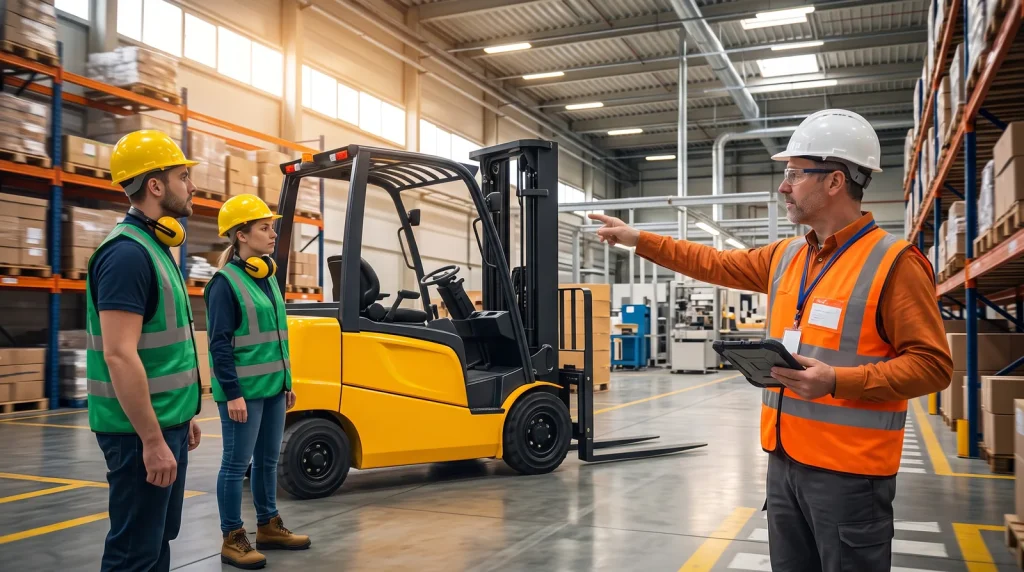
A forklift is one of the most productive tools in a plant, but it is also one of the riskiest machines on the floor. That is why forklift operator training isn’t optional. In the United States, OSHA sets the rules. In Mexico, where our clients operate, the standard is NOM-006-STPS-2014. Both share the same idea: only trained, evaluated, and authorized people should operate a forklift. In this guide, we explain the main forklift operator training requirements.
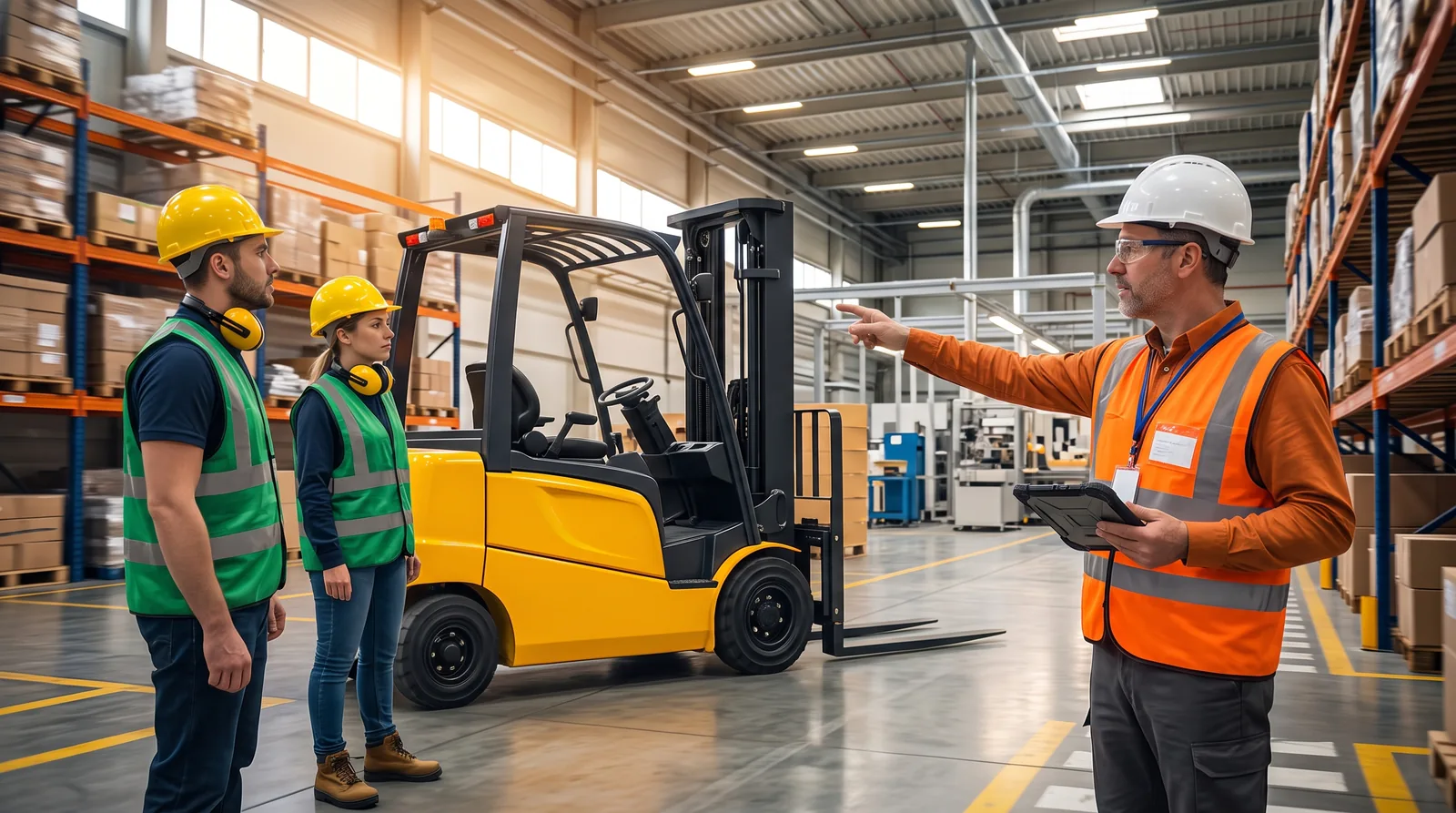
Who Is Responsible for Training
The responsibility falls on the employer. The company must make sure that every person who operates a forklift has been trained on the type of equipment they will use and has proven they can operate it safely.
This applies whether the forklift is owned or rented. A rented truck still needs a trained operator from your own team.
What OSHA Requires
Under OSHA’s powered industrial truck standard, the training program must include:
- Formal instruction, such as classes, videos, or written material.
- Practical training, with demonstrations and hands-on exercises.
- Evaluation of the operator’s performance in the actual workplace.
- Certification by the employer that the operator was trained and evaluated.
OSHA also requires an evaluation at least once every three years, and refresher training when an operator has an accident or near miss, is seen operating unsafely, or is assigned a different type of truck.
What NOM-006-STPS Requires in Mexico
For operations in Mexico, NOM-006-STPS-2014 covers material handling and storage. It requires employers to provide theoretical and practical training, issue written authorization to operators, keep clear operating procedures, maintain a review and maintenance program for the equipment, and keep records ready for inspection. Training is commonly documented with a DC-3 certificate issued by a trainer registered with the STPS.
What Good Training Should Cover
A strong program goes beyond driving. At a minimum, it should cover:
- Truck types, components, and safety devices.
- The pre-shift inspection.
- Load capacity, load center, and stability.
- Traveling in aisles, on ramps, and around pedestrians.
- Battery charging or refueling, depending on the truck.
- What to do in case of a problem or emergency.
Training should also match the actual equipment. An operator experienced on a combustion forklift needs to learn the differences before using a reach truck or an order picker.
Rented Forklift, Your Operator
At Juárez Rental, we rent equipment without an operator. That means the people who will use it must be part of your team and hold the corresponding training and authorization. When we deliver the truck, we walk you through its features so your operators get familiar with it.
Pair training with good daily habits. Read our guide on electric forklift battery charging and daily checks.
Safe Equipment for Safe Operation
A trained operator needs equipment in good condition. Explore our forklift rental and electric forklift rental options. If your own trucks need attention, check our forklift repair and maintenance service.
This article is for general information. To confirm every obligation that applies to your workplace, review the official standards or consult a safety specialist.
Have questions about the right equipment for your operation? Contact us.